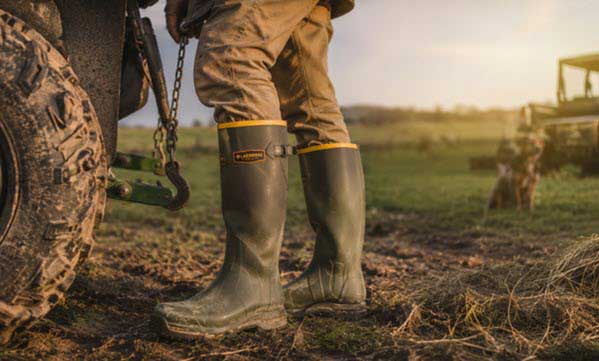
Outdoor footwear is becoming more specific because the ground people work and travel on is specific. A farmer crossing wet pasture, a hunter moving through brush, and a utility worker standing on slick outdoor surfaces may all need boots, but not for the same reason. When comparing waterproof, field-ready options review LaCrosse rubber boot styles as one example of how rubber construction, traction, insulation, and protective features fit into this broader shift toward terrain-matched footwear.
The best way to understand current boot trends is to start with the surface underfoot. Mud, standing water, cold soil, gravel, brush, snow, wet concrete, and uneven ground all ask different things from a boot. The useful trend is choosing boots with better terrain literacy.
Terrain Is Driving Boot Design
Many used to think in broad categories, work boots, hunting boots, farm boots, or rain boots. Those categories still matter, but they are not enough on their own.
A work boot may need safety protection. A farm boot may need waterproof rubber and easy cleanup. A hunting boot may need insulation and coverage. A landscaping or utility boot may need traction on wet grass, dirt, and paved surfaces in the same day.
The trend is toward boots that answer a sharper question, what will the ground be like, and what will the wearer be doing there? A ranch worker may deal with mud in the morning and gravel by afternoon. A hunter may cross a wet field before climbing into colder timber. A construction worker may need waterproofing during site prep and protective footwear around impact or puncture hazards.
Waterproof Rubber Is Becoming More Purpose-Built
Rubber boots are no longer viewed only as simple wet-weather gear. For farmers, hunters, and workers, waterproof rubber construction remains useful because water does not stay in one place.
Wet grass, irrigation, manure, mud, marsh, rain, and standing water can all change footwear performance. Rubber makes sense when waterproofing, mud resistance, and easy cleaning matter more than maximum breathability. It is especially relevant for agriculture, fishing, hunting, and outdoor labor where moisture is part of the environment.
That does not mean rubber is right for every situation. On dry, rocky, or high-mileage terrain, some buyers may prefer a lace-up work or hiking-style boot with more ankle structure and ventilation. The trend is that rubber designs are becoming more specialized for real outdoor tasks.
Traction and Stability Are Moving to the Center
Outdoor footwear buyers are paying closer attention to how the outsole meets the ground. Traction is not only about grip. It is about confidence in changing surfaces.
Mud needs a different outsole approach than wet concrete. Loose soil feels different from packed gravel. Snow, brush, wet leaves, and sloped fields all affect footing in their own way.
The National Institute for Occupational Safety and Health has published research on slip-resistant footwear in wet or greasy workplace settings. While food service is different from a farm or outdoor job site, the research supports a broader point: footwear design deserves attention when people work around slick surfaces.
For outdoor buyers, the decision question is simple. Will the outsole match the ground? A boot chosen for open pasture may not be ideal for wet ladders, rocks, or hard job-site surfaces.
Insulation Is Becoming More Situational
Cold-weather boots are also becoming more decision-specific. The question is no longer just whether a boot is insulated. It is how much insulation makes sense for the activity.

A hunter sitting still in cold weather may want more warmth than a worker who is constantly moving. A farmer doing active chores may need enough insulation for cold mornings without overheating later. A utility or construction worker may need warmth but still require safety features or a sole suited to the work surface.
Buyers should be cautious with broad claims. A boot with insulation is not automatically the best cold-weather choice for every person. Temperature, moisture, activity level, sock choice, and time spent standing still all influence comfort.
Safety Features Are Shaping Outdoor Work Footwear
For workers, protective features can be more than a preference. They may be tied to job hazards. OSHA’s foot protection standard states that employers must ensure affected employees use protective footwear when there is danger from falling or rolling objects, objects piercing the sole, or certain electrical hazards.
That makes safety toe, metatarsal guard, puncture resistance, electrical hazard protection, and slip-resistant design important decision points for some outdoor workers.
Farmers and ranchers may evaluate protection differently than hunters. Agriculture involves varied environments, equipment, animals, uneven ground, and changing weather. NIOSH describes agriculture as a sector with high risks of fatal injuries and illnesses among workers and families, which reinforces why footwear decisions should be based on real working conditions rather than style alone.
A soft toe boot may be comfortable for certain outdoor tasks. A safety toe or metguard boot may be more appropriate where heavy objects, tools, or equipment are involved.
Hunting Footwear Is Borrowing from Workwear Logic
Hunters have always cared about terrain, but the current trend is a more technical approach to boot choice. Waterproofing, insulation, height, camouflage, outsole pattern, and coverage all matter because hunting conditions often combine movement with waiting.
Wet fields, wooded trails, marsh edges, and cold stands each call for different footwear decisions. A tall rubber boot may be useful in wet or muddy ground, while a more structured boot may be better for long walks over uneven terrain.
Hunters also often overlap with farm and land-management work. Some buyers want one boot that can handle chores and hunting. Others may find that two specialized pairs are more practical than forcing one pair to do everything.
The Best Trend Is Better Matching, Not More Features
A boot with more features is not automatically the better purchase. More insulation can be too warm. A heavy-duty safety boot can be excessive for light outdoor use. A soft rubber boot may be useful in wet mud but less ideal on abrasive surfaces.
The better buying framework is to match the boot to four conditions: ground, weather, task, and risk. Ground includes mud, wet grass, brush, gravel, concrete, snow, or mixed terrain. Weather includes rain, cold, heat, standing water, or seasonal swings. Task includes farming, hunting, landscaping, construction, fishing, ranch work, or general outdoor use. Risk includes slipping, impact, puncture, cold exposure, water intrusion, or brush contact.
Conclusion
Outdoor footwear trends are becoming more useful because they are becoming more specific. For farmers, hunters, and workers, the right boot is not defined by a category label alone. It is defined by the ground, weather, task, and risk in front of the wearer.
Waterproof rubber construction, insulation, traction, stability, and protective features all have a place. The value comes from matching those features to the actual environment. A good boot choice should feel less like following a trend and more like selecting the right tool for the job.