Efficiency ratings are printed on every HVAC system, but most people don’t know what they mean. Here’s a clear explanation and why they matter when you’re buying new equipment.
When you shop for a new furnace or air conditioner, efficiency ratings are plastered everywhere. SEER, AFUE, HSPF, EER, and a few others show up in product descriptions, contractor quotes, and rebate program requirements. Understanding what these numbers mean turns an abstract comparison into something you can actually use to make a smarter purchasing decision.
The efficiency of HVAC equipment matters for two reasons that compound over time. A more efficient system uses less energy to do the same amount of heating or cooling, which reduces monthly utility costs. Over the lifespan of a unit that you’ll own for fifteen to twenty years, those savings add up to a meaningful amount.
AFUE: Furnace Efficiency
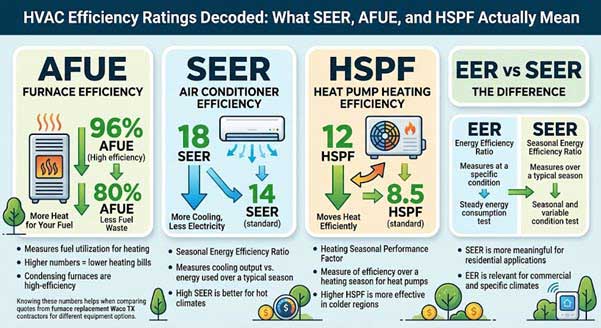
AFUE stands for Annual Fuel Utilization Efficiency. It measures how much of the fuel burned by a furnace is converted into usable heat. An 80% AFUE furnace converts 80% of the gas it burns into heat and loses 20% out of the exhaust flue. A 96% AFUE furnace converts 96% and loses only 4%. The higher the number, the more of your fuel dollar is going toward actually heating your home. Knowing these numbers helps when comparing quotes from furnace replacement Waco TX contractors for different equipment options.
High-efficiency furnaces, typically those above 90% AFUE, are condensing furnaces. They extract additional heat from the combustion gases before they exit the system, which cools those gases enough that they condense. This requires a secondary heat exchanger and produces a small amount of condensate water that needs to drain. The efficiency gain is real and significant, but the installation is somewhat more involved.
SEER: Central Air Conditioner Efficiency
SEER stands for Seasonal Energy Efficiency Ratio. It measures the cooling output of an air conditioner divided by the energy it consumes over a typical cooling season. Higher SEER means more cooling for less electricity. The minimum SEER for new central air conditioners has been steadily increasing through federal regulations, and current minimums in most regions are 14 SEER or higher.
The jump from a 14 SEER to a 16 or 18 SEER system does translate into real savings on cooling costs. The payback period for the higher upfront cost depends on how many hours per year your cooling system runs, which varies significantly by climate. In a hot climate where the AC runs eight or nine months of the year, high-efficiency equipment pays back faster than in a milder climate with a shorter cooling season.
HSPF: Heat Pump Heating Efficiency
HSPF stands for Heating Seasonal Performance Factor and applies to heat pumps in heating mode. Heat pumps don’t burn fuel. They move heat, which is fundamentally more efficient than generating it. A heat pump can deliver more than one unit of heating energy for each unit of electrical energy it consumes. HSPF is the measure of how well it does this over a heating season.
Minimum HSPF requirements have also been tightening. Modern heat pumps range from around 8 to above 14 HSPF. Cold-climate heat pumps, which are designed to function efficiently at lower outdoor temperatures than standard heat pumps, have become much more capable in recent years and are a genuine heating option in climates that were previously considered too cold for heat pump technology.
EER vs SEER: The Difference
EER (Energy Efficiency Ratio) is a simpler measure than SEER that tests efficiency at a specific set of conditions rather than across a seasonal range. EER is most relevant for commercial applications or in climates where conditions are fairly consistent. SEER is more meaningful for residential applications in climates with temperature variation because it accounts for the range of conditions the equipment will actually operate under.
Some high-efficiency equipment quotes both SEER and EER ratings. When comparing equipment, using the same metric across options gives you an accurate comparison. Mixing SEER and EER numbers leads to incorrect conclusions.
Rebates and Minimum Efficiency Requirements
Utility companies and government programs frequently offer rebates for installing high-efficiency HVAC equipment. These rebates often specify minimum efficiency thresholds to qualify, and the thresholds are usually higher than the regulatory minimum. Checking available rebates in your area before purchasing equipment can meaningfully affect the effective cost of higher-efficiency options.
Federal tax credits for high-efficiency equipment have been available and modified over the years. The specific credit amounts and eligibility requirements change with tax legislation, so verifying current credits with a tax professional or checking the current IRS guidance is worth the effort before making a significant equipment purchase.
Does Higher Efficiency Always Make Financial Sense?
Not always. The premium for high-efficiency equipment is real and upfront. The savings are real but spread out over years. Whether the math works in your favor depends on how long you’ll own the equipment, how much you currently pay for energy, and how heavily the system runs in your climate. Running a rough payback calculation before buying, rather than assuming higher efficiency is always better financially, leads to smarter decisions.
Energy prices add another variable. If natural gas prices rise significantly over the next decade, the savings from a high-efficiency furnace grow. If prices stay flat or fall, the payback period extends. Nobody knows with certainty where energy prices will go, which is part of why this calculation requires some judgment along with the math.
Wrapping Up
Understanding what efficiency ratings actually measure transforms them from confusing acronyms into useful decision-making tools. AFUE for furnaces, SEER for central air conditioning, and HSPF for heat pumps are the three numbers that matter most for typical residential HVAC purchases. Higher numbers mean more efficient equipment, lower operating costs, and often eligibility for rebates that reduce the upfront premium. Whether the premium is worth it depends on your specific situation, and understanding the numbers gives you the foundation to work through that analysis.
Frequently Asked Questions
How much does it cost to run a high-efficiency furnace compared to a standard one?
The savings depend on how many hours per year the furnace runs, local natural gas rates, and the efficiency difference between the units being compared. As a rough example, upgrading from an 80% AFUE to a 95% AFUE furnace reduces fuel consumption by about 16% for the same amount of heat produced. In a climate where the furnace runs a lot and gas prices are not trivially low, that can represent meaningful annual savings.
Is a higher SEER air conditioner always better?
It’s always more efficient, but whether the efficiency gain is worth the additional upfront cost depends on your specific situation. In climates with long, hot cooling seasons and high electricity rates, high-SEER equipment pays back the premium relatively quickly. In milder climates with shorter seasons or lower electricity costs, the payback period is longer and the financial case for maximum efficiency is weaker.