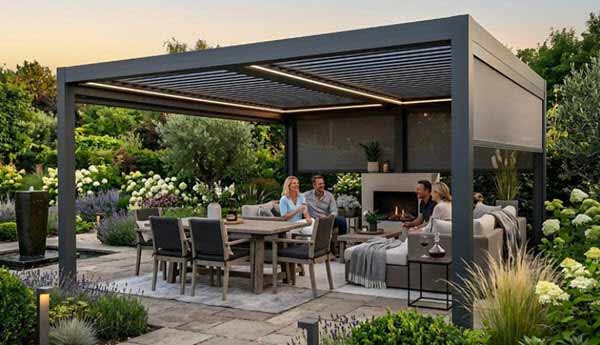
There is a moment every summer when the patio stops being inviting. The pavers get too hot for bare feet, the cushions fade a little more each week and that comfortable chair beside the flower bed turns into a spot you avoid between noon and four. Many gardeners end up spending the brightest part of the day indoors, looking out at the garden instead of sitting in it.
A retractable awning offers a simple fix. It gives you shade when you want it and sun when you do not, which makes it an especially good match for people who care as much about their plants and pollinators as they do about their own comfort.
Why Retractable Beats Fixed Shade in a Garden
A fixed roof or permanent pergola cover creates the same amount of shade all day, every day. That is fine for a porch, but a garden is a living space that changes with the seasons.
With a retractable awning, you decide:
● Morning: keep it rolled in so the sun can warm the patio and wake up nearby plants.
● Midday: extend it to cool down the seating area during the hottest hours.
● Evening: pull it back to watch the sunset or the first stars.
● Spring and fall: leave it open more often to catch the gentler light when you want warmth.
That flexibility matters for the plants around your patio too. Many flowering plants, including a lot of popular butterfly favourites, want several hours of direct sun to bloom well. A permanent cover can quietly starve them. A retractable one lets you share the light.
Keeping Butterflies in the Picture
If you have planted a pollinator bed, you already know that butterflies like sunny, sheltered spots. They often bask on warm stones or leaves before they become active, and they tend to visit nectar plants in bright, open areas.
When planning an awning, try to keep your best nectar plants just outside the shade line. A few ideas:
● Put sun lovers like coneflower, zinnia, lantana and milkweed along the edge of the patio where the awning will not reach.
● Use the newly shaded zone for plants that prefer some relief from the afternoon sun, such as ferns, hostas, impatiens or begonias in containers.
● Add a shallow dish with damp sand or pebbles in a sunny corner. Butterflies often gather at moist spots to sip minerals.
The result is a patio where you can sit comfortably in the shade and watch the activity in the sunny beds a few steps away.
Choosing the Right Awning for a Garden Patio
A few practical questions will help narrow your options.
| Question | Why it matters |
| How far out should it extend? | Measure the seating area you want covered, not the whole patio. You may want sun on the far edge for plants. |
| Which direction does the patio face? | South and west facing patios get the strongest afternoon sun and benefit most from shade. |
| Manual or motorized? | Motors make it easier to use the awning often, which is the whole point of retractable shade. |
| What fabric? | Look for fade resistance, water resistance and resistance to mould and mildew, especially near damp garden beds. |
| Do you want side drops? | A drop curtain or valance can block low evening sun that slips under the main awning. |
Working with an experienced local installer makes these choices easier, because they can look at your house, your mounting surface and how the sun moves across your yard. In western Pennsylvania, for example, Venango Awning designs and installs custom fabric and metal awnings for homes, including retractable and patio awnings, and offers free estimates. Whoever you hire, ask to see fabric samples outdoors in natural light, since colours can look very different than they do in a showroom.
Caring for Your Awning and the Garden Around It
A little routine care keeps everything looking good:
- Retract in strong wind and heavy rain. Most retractable awnings are made for sun and light weather, not storms.
- Let wet fabric dry fully before rolling it up for long periods to help prevent mildew.
- Brush off leaves, pollen and bird droppings with a soft brush, then rinse with plain water.
- Trim nearby shrubs and climbers so branches do not rub against the fabric or frame.
- Watch your watering. Plants under the awning may get less rain than you expect, so check containers more often.
Shade Is Also Sun Protection
A cooler patio is the obvious benefit, but shade also helps limit how much time you spend in direct sun while you garden, read or eat outside. That is worth thinking about, because many of us lose track of time when we are weeding or deadheading.
An awning is helpful, but it is only one part of sun safety. Light still reflects off pavers, water and pale surfaces, so shade does not block all UV exposure. The Skin Cancer Foundation offers general guidance on combining shade with sunscreen, hats and protective clothing. For advice about your own skin, follow what your doctor or dermatologist recommends.
A Patio You Will Actually Use
The best outdoor spaces are the ones you use every day, not just on mild evenings. A retractable awning gives you control over light and heat, so the patio stays comfortable through the long middle of summer.
Plan the shade around the way you live in the garden. Keep sunny beds sunny, give yourself a cool place to sit and leave room for the butterflies to do their thing. With a bit of thought, you can enjoy both the shade and the garden that grows around it.