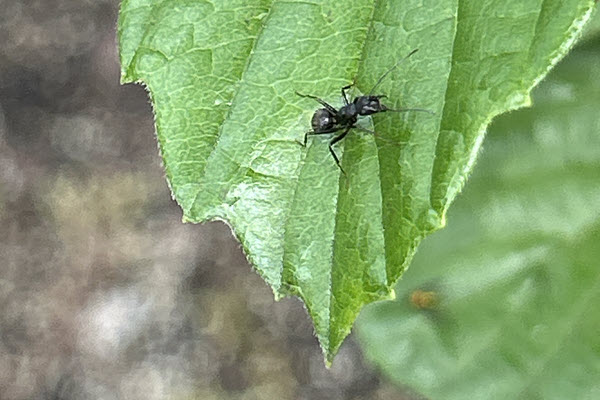
I once lost an entire late-summer batch of monarch eggs to a line of tiny ants, and I did not see it happen. That is the thing nobody warns new gardeners about. You plant milkweed, the monarchs show up, you feel like a genius for about two weeks, and then ants quietly farm the whole operation into an aphid colony while your caterpillars disappear one by one.
If you are in Southern California, this is not a rare story. In the foothill cities between the coast and the desert, ants and butterfly gardens have been fighting each other for decades, which is exactly why so many local gardeners bring in pros for ant control in chino hills, ca long before the first caterpillar ever hatches. Not every ant merits a counterattack, though. Some are just passing through, and a few are doing you a favor.
Here is the honest breakdown of what ants are actually doing on your plants, how the harmless ones look next to the harmful ones, and the exact moment I would stop treating a butterfly garden like a science experiment and start treating it like an infestation.
Ants and butterflies: it’s not war, it’s a business deal
Ants are not predators. They are dairy farmers.
Aphids, mealybugs, and soft scale insects excrete a sugary waste called honeydew, and ants love it enough to protect those insects from ladybugs, lacewings, and anything else that tries to eat them. That relationship is one of the oldest partnerships in nature. Researchers have documented ants tending plant-feeding insects and trees for hundreds of thousands of years, in some cases dating back well before humans existed, but here is a fact worth pinning to the fridge: the US Forest Service and others note that many plants and ants have co-evolved these sugar-for-protection deals for millions of years. The practical takeaway is simple. If you see ants on your milkweed, you almost certainly have aphids, whether you can spot them yet or not.
You can watch the whole drama on your butterfly bushes. Your California native milkweeds feed a whole little economy, and your ecosystem needs some of it. So the strategy is not to wipe out every ant on the property. It is to stop the farming where it hurts your caterpillars and your nectar plants.
How to tell the harmless visitor from the freeloader
Before I do anything, I spend three minutes watching the trail. It sounds fussy, but it has saved me from spraying the wrong insect at least twice.
● One or two ants on a flower bud, moving fast, no line: that is a scout. Leave it alone.
● A steady line running up and down a stem: that is a farm crew, and you have honeydew somewhere up top.
● Ants crawling around the base of a pot rather than the leaves: often a moisture or nesting issue, not aphid farming.
My honest take: the trail is the only signal that matters. A single ant on a zinnia is not a pest problem. It is a Saturday morning. But by the time you see visible columns of them running to the same plant every day, look underneath the leaves. A southern California butterfly garden meeting point like Chino Hills is basically a red-carpet event for this, because those communities sit right against the foothills, they run warm and dry, and they are irrigated heavily enough that a colony is comfortable year round.
Here is the part that changed how I think about garden ants forever: it is not the summer heat that builds a colony. It is moisture. Overwatering shrinks the gap between your flower bed and the ant world. Water smarter and you have half a pest problem before you do anything else.
Can mechanical control and native plants actually work?
Yours might, before you spray anything. If you catch the aphids early, a strong stream of water knocks them off along with the honeydew ants come for, and often the whole party relocates within a day. That has worked in my garden more times than any bottle has. For the ants themselves, a homemade essential oil spray can only patrol the surface for a few hours. I say this as someone who has tried it. Water, soap, and a bit of diligence handle the small stuff, and the University of Nevada Cooperative Extension tracks garden insect pressure across the region if you want broader context on the overwatering pattern.
What does not work is the surface approach, and Chino Hills makes that obvious from the first hot week: if you spend weeks spraying the visible ants, you are just touring the symptom. Surface treatments kill the ants you can see and skip the colony you cannot, so the line is back within days.
Where gardening and pest control genuinely overlap is the moisture conversation. Planting butterfly nectar and host plants in a way that does not create a permanent damp perimeter around your foundation is the smartest ant control there is, and it costs nothing besides restraint with the hose.
A simple control plan you can copy
Work the list in order. It has held up for me across three properties and several stubborn years.
1. Find the honeydew source first. Follow the trail to the top. If you treat ants without treating aphids, you are mowing a lawn that keeps regrowing.
2. Blast the infested stems with water in the morning and again for two or three days. Keep doing it until the trail stops.
3. Fix your watering around the bed edges. No standing water, no perpetually wet mulch stacked against siding or fences.
4. Keep branches and tall grasses from touching the structure. Ants use plants as bridges.
5. Trim and clean up around the base, because a trail finds weak spots even when you cannot see them yet.
Notice what you are not doing. You are not broadcasting poison across the flowers that feed your pollinators. That matters, and the stats back it up. According to the Bureau of Labor Statistics, landscape and groundskeeping work is still one of the largest categories of employment in the country, which tells you how many of us are out there trying to get the same balance right.
The moment I’d stop and call someone
There is a line for me, and it sits right where the DIY effort stops paying for itself. If ants keep returning to the same bed no matter what you do, if you have pulled the same mulch out of the same corner twice, or if you are losing entire broods to them and no longer enjoying the garden, call someone who has handled the California supercolony problem a hundred times. A pest generalist doing this without any real consideration of a butterfly garden is not who you want either. Look for a company that will bait rather than blanket your flower beds in repellant.
It is easy to see the daily maintenance as the whole job. It is not. Your butterflies just need a garden that is working for them, and you want the same.
So walk your beds this weekend, follow one trail to its source, and decide which side you are on. Somewhere out there, a caterpillar is waiting on you to get it right.