I have spent more than 25 years climbing trees around Tampa Bay, and one thing still surprises homeowners: the tree they want cut back is often the busiest butterfly nursery on the property. We plant milkweed for the adults, then send a crew up the oak without a second thought. Most caterpillars in a yard are not on the flowers. They are in the canopy, on the bark, and in the leaves on the ground.
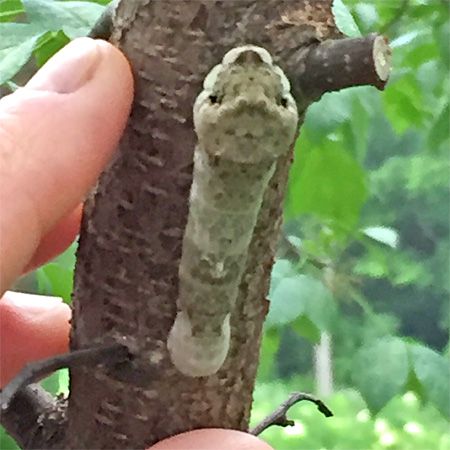
Know Which of Your Trees Are Host Plants
Before any saw comes out, figure out what the tree feeds. A few of the big ones:
- Oaks. Oaks support more than 500 species of butterflies and moths, more than any other woody plant. Hairstreaks and duskywings lay eggs on them, and so do hundreds of moths that songbirds depend on.
- Hackberry and sugarberry. Hackberry emperors, tawny emperors, question marks and American snouts all raise their young on these.
- Black cherry. A favorite of the eastern tiger swallowtail and the red-spotted purple.
- Pawpaw. The only host for the zebra swallowtail. No pawpaw, no zebras.
- Prickly ash and wild lime. Giant swallowtail caterpillars, the ones that look like bird droppings, feed on these.
- Redbay, swamp bay and sweetbay. Bay trees feed the Palamedes and spicebush swallowtails in the Southeast.
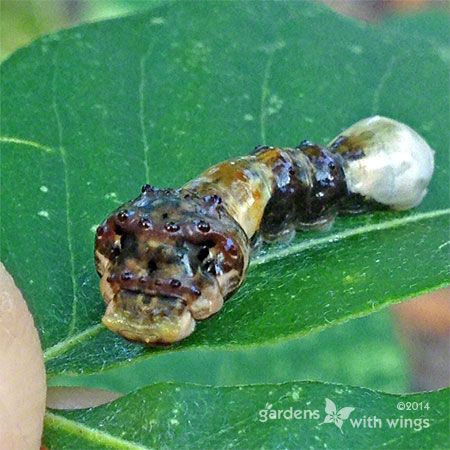
Look Before You Cut
This takes ten minutes and saves more caterpillars than anything else I can tell you. Walk around the tree and look at the lower branches, the undersides of leaves and the trunk. If you are hiring a crew, ask them to walk it with you first. When our crew does tree service in Tampa, that walk-around happens before anyone ties in a rope.
You are looking for:
- Small round eggs, usually one per leaf, on new growth
- Chewed leaf edges with a caterpillar nearby
- Chrysalises hanging from twigs or stuck flat against the bark
Swallowtail chrysalises can sit on a branch for months, all through winter. They look like a curled dead leaf or a bit of broken twig, and they get thrown in the chipper all the time.
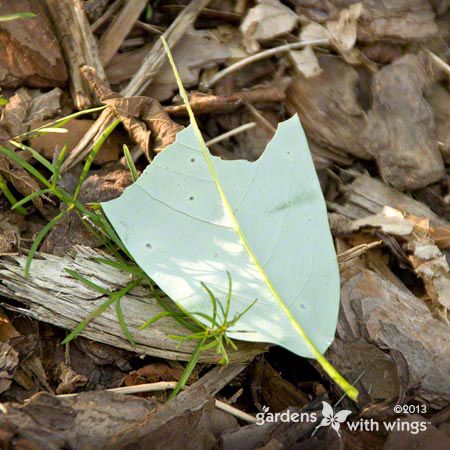
If you find something on a branch that has to come off, cut the branch a little long and tie or wedge it into a nearby shrub at a similar angle. The chrysalis does not care that it is no longer attached to the tree.
Prune at the Right Time, and Only What Needs It
Late winter is usually the best window for structural pruning. Most caterpillars have finished feeding, birds have not started nesting, and you can see the branch structure without leaves in the way. In Florida our seasons run differently, but the same idea applies: do the big cuts outside peak egg-laying and nesting season.
Just as important is how much you take. A host tree that loses a third of its canopy in one visit also loses a third of the soft new leaves young caterpillars need. Ask for selective pruning: remove dead, crossing and hazardous limbs, and leave healthy leaf cover alone.
Skip “lion-tailing,” where every branch is stripped bare on the inside and leaves are left only at the tips. It weakens the tree in wind and removes exactly the sheltered interior foliage where caterpillars hide from birds and wasps.
Leave the Leaves (and Some Dead Wood)
Many butterflies and moths finish their life cycle on the ground. Caterpillars drop from the canopy and pupate in leaf litter. Some adults, like the mourning cloak and the question mark, spend winter tucked into loose bark, woodpiles and tree cavities.
That means the cleanup crew can do as much damage as the pruning crew. A few habits help:
- Rake leaves off the lawn into the beds under your trees instead of bagging them.
- Keep a small brush pile or log in a back corner.
- If a dead tree is not a safety risk, ask whether part of the trunk can stay standing as a snag.
When a Host Tree Gets Sick
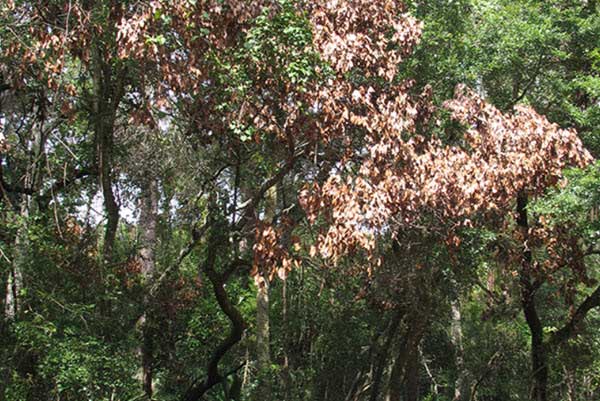
Sometimes the tree itself is the problem. Here in Florida, laurel wilt is the clearest example I know of a tree disease that is also a butterfly problem.
Laurel wilt is a fungal disease spread by the tiny redbay ambrosia beetle. Since it arrived in Georgia in 2002, it has killed more than 300 million redbay trees across the Southeast, and it also hits swamp bay, sassafras and avocado. Those bay trees are exactly what Palamedes swallowtail caterpillars eat, according to the University of Florida’s species profile of the Palamedes swallowtail. Researchers are now studying whether the butterfly can shift to other plants as its main hosts disappear.
If a bay or avocado in your yard suddenly wilts and holds its brown leaves, do not move the wood off the property as firewood or mulch. That is how the beetle spreads. The safest route is to have the tree chipped on site and the chips covered for at least a week.
If you lose a host tree, replant with a mix of native host species so no single disease can wipe out the whole nursery.
A Tree Is a Long-Term Butterfly Garden
A flower bed can be replanted next spring. A mature oak or hackberry took decades to grow, and it may be feeding more caterpillars than every flower in your yard combined. If you are not sure what is growing in your yard, start with this list of trees that are host plants for butterflies. Then give each one a walk-around before any work, ask for selective cuts, leave a little mess underneath, and they will keep filling your garden with wings for years.
Tony Padgett is an ISA Certified Arborist (FL-9569A) and the owner of Panorama Tree Care in Tampa, Florida, where he has cared for trees across Tampa Bay since 2000.