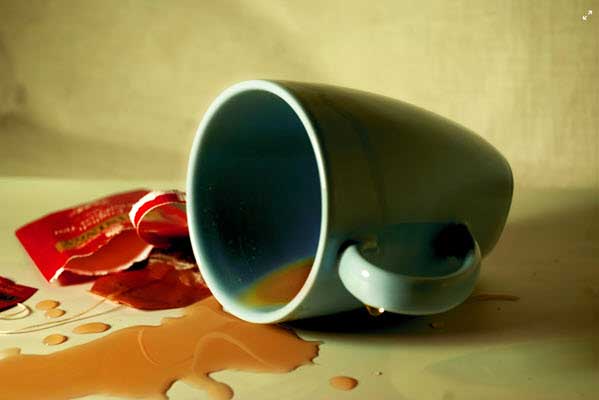
A coffee spill that happened two minutes ago and a dark mark that has been sitting behind an appliance for months may look similar from a distance.
They should not automatically be treated the same way.
Residue changes as it sits. Liquid can dry. Food can harden. Repeated splashes can form layers, and dust may settle onto slightly sticky surfaces. What began as a simple wipe can become a more stubborn cleaning problem after enough time has passed.
Before reaching for a stronger product or scrubbing harder, consider one basic question: how old is the residue?
The answer can change the safest and most practical approach.
Fresh Spills Usually Call for Fast Containment
A fresh spill is still moving.
Liquid can spread across a counter, reach a floor seam, run beneath an appliance, or soak into an absorbent material.
The first priority is usually containment.
Stop the spill from travelling farther. Remove excess material using an approach suitable for the affected surface, then deal with what remains.
Rubbing aggressively at this stage may spread the mess rather than remove it.
Fast action should mean controlled action, not frantic scrubbing.
Blotting and Wiping Are Not the Same
The correct movement depends on what has spilled and where it landed.
On some absorbent materials, pressing or blotting may help lift liquid without spreading it across a wider area.
A hard, nonporous surface may instead call for a controlled wipe.
The material beneath the spill still matters.
A method suitable for sealed tile may not suit upholstery, unfinished wood, or another sensitive surface.
Age is only one part of the decision. Surface compatibility remains just as important.
Recently Dried Residue Needs Patience
Once a spill dries, the problem changes.
The liquid portion is gone, but solids, sugars, oils, minerals, or pigments may remain attached to the surface.
At this stage, repeated dry wiping may accomplish very little.
The temptation is to press harder.
That can be a mistake, especially on finishes that scratch or dull.
Use a method appropriate for the material and give it enough time to work as directed instead of assuming extra force is the answer.
Check the Edges of a Dried Mark
Older residue often reveals itself at the edges.
A dried splash may leave a visible outline.
A sticky mark can collect dust around its perimeter.
Food residue may become thicker where material pooled before drying.
Inspect the boundary before starting.
The edge can show whether the mark sits mostly on top of the surface or whether it appears to have affected the material itself.
That observation can help prevent unnecessary scrubbing across an area much larger than the actual problem.
Repeated Buildup Is Different From One Old Spill
Not every stubborn mark came from a single event.
Some buildup develops one thin layer at a time.
Grease near a stove is a common example. So is soap residue around a frequently used sink or repeated water spotting around a fixture.
Each individual layer may have been minor.
Over time, they combine into something much more noticeable.
This type of buildup should be treated as accumulation rather than as one unusually difficult spill.
Understanding that difference can explain why a quick wipe no longer produces the result it once did.
Look for Protected Patches
Objects can preserve clues about how long residue has been developing.
Move a lightweight countertop container and you may find a cleaner outline beneath it.
Lift a bathroom item and the surface around it may show a duller film.
A piece of furniture that has stayed in one place can leave a similar contrast on the floor.
These protected patches reveal change over time.
They can show that the issue is gradual buildup across an exposed surface rather than one isolated recent mark.
Dust Can Attach to Older Residue
A slightly oily or sticky surface attracts more than the original mess.
Dust, lint, hair, and other fine particles can settle onto it.
That combination can make old residue look darker or thicker than it originally was.
Remove loose material first where appropriate.
This allows you to see what is actually attached underneath.
Trying to wet-clean everything at once may turn loose dust into a smear and make the original buildup harder to evaluate.
Unknown Marks Deserve More Caution
Sometimes nobody knows when a mark appears.
It may be discovered behind furniture, beneath a container, inside an emptied cabinet, or in a room that has not been cleaned closely for some time.
Do not invent a history for it.
Treat an unknown mark cautiously.
Identify the surface material, begin with a conservative compatible method, and avoid escalating immediately to harsh products or abrasive tools.
If the mark may involve damage rather than removable residue, stronger cleaning may not solve it at all.
Do Not Confuse Staining With Dirt
A surface can remain discolored after removable residue is gone.
That does not always mean it is still dirty.
Pigment may have changed the material.
A finish may have worn differently in one spot.
Mineral exposure, heat, moisture, or age can alter appearance in ways ordinary cleaning cannot reverse.
Continuing to scrub after the removable material is gone may damage the surface while chasing a visual change that cleaning cannot correct.
Knowing when to stop is part of good cleaning judgment.
Repeated Scrubbing Is a Warning Sign
If the same spot is being scrubbed again and again without much change, pause.
Ask what you are actually trying to remove.
Is there still residue on top?
Has the material changed color?
Is the finish becoming dull?
Would a different surface-safe approach make more sense?
More effort is not always progress.
A stubborn mark can tempt people into gradually increasing pressure until the cleaning process causes more visible change than the original residue.
Record What You Know About a Difficult Mark
The history of a mark can be useful information, especially when it needs more attention than ordinary routine cleaning.
A short note such as “fresh coffee from this morning,” “dried cooking residue from yesterday,” or “older buildup with unknown history” provides context that the room name alone cannot.
That distinction also matters when working with cleaning services chicago, because the age and known source of a stubborn area can help separate a recent spill from repeated accumulation or an older mark whose history is uncertain.
The point is not to diagnose the surface in advance.
It is to preserve information that may affect how cautiously the area should be approached.
Prevent Layers From Becoming One Large Problem
Gradual buildup is easier to manage before several layers combine.
Pay attention to the places where residue repeatedly appears.
That could be the backsplash beside a busy stove, the counter around a soap dispenser, the floor below a pet bowl, or the handle area of a frequently used cabinet.
Regular attention to those specific areas can interrupt accumulation.
This does not require deep cleaning the entire room more often.
It means recognizing where small deposits repeatedly land.
Let the Surface Set the Limit
Even when the residue is old, the surface underneath still decides how aggressive cleaning should become.
A delicate finish does not become more tolerant simply because the mark is stubborn.
Follow available care guidance.
Test cautiously when appropriate.
Avoid mixing products unless their instructions explicitly support it, and do not assume stronger chemicals or rougher tools are the inevitable next step.
Sometimes the correct result is improvement rather than complete removal.
Protecting the material matters more than forcing a perfect-looking finish.
Use Time as Part of the Cleaning Decision
Residue has a history.
Fresh spills can spread. Recently dried marks may need a controlled method rather than more force. Repeated deposits can build into layers, while older unknown marks call for extra caution.
Before cleaning a stubborn area, look beyond its appearance.
Ask when it happened, whether the same residue has accumulated repeatedly, what surface lies underneath, and whether the remaining mark is still removable material or a change in the finish itself.
Cleaning becomes safer and more focused when time is treated as part of the problem.
The same mark does not always require the same response simply because it appears in the same place.