Picture this. You’re out mowing on a Saturday morning, pushing that mower over the same boring strip of grass along the fence line, while ten feet away your milkweed is crowded, your coneflowers are fighting for sun, and you’re thinking, I really wish I had more room back here.
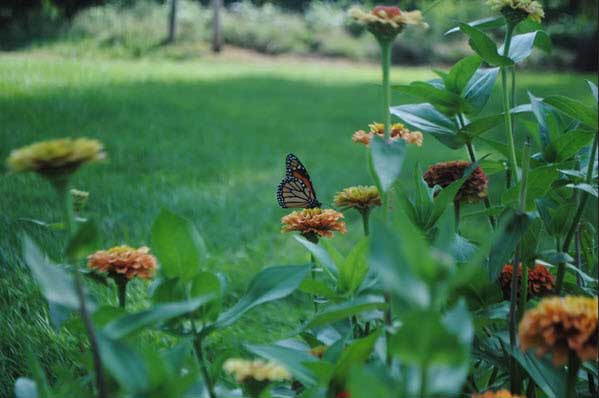
Sound familiar? Here’s the thing. A lot of us are sitting on more room than we realize. It’s just currently disguised as lawn.
Traditional grass is a strange resident in a butterfly garden. It doesn’t feed anything, it doesn’t host a single caterpillar, and it demands mowing, watering, and fertilizing in exchange for absolutely nothing pollinators care about. Meanwhile, that same square footage could be doing real work for monarchs, swallowtails, and every other winged visitor you’re trying to attract.
Lawn Isn’t the Enemy, But It’s Not Pulling Its Weight Either
Let’s be fair to grass for a second. It has its place: a path to walk on, a spot for the dog, a buffer between garden beds. Nobody’s saying rip out every blade on the property. The real question is which parts of your lawn are actually doing something for you, and which parts are just there out of habit. Some university extension research on lawn ecology has found that turfgrass alone provides almost no food value for most native pollinator species, which is a big part of why so many gardeners are starting to rethink how much of their yard actually needs to stay grass.
Walk your yard and be honest with yourself. That patch behind the shed? The narrow strip along the driveway that’s awkward to mow anyway? Those spots probably aren’t adding anything to your butterfly habitat, and they’re not exactly a joy to maintain either.
For those specific non-blooming areas (the paths, edges, and awkward corners that see foot traffic but never see a caterpillar), swapping to synthetic grass can free up a surprising amount of time and water. It stays green without mowing or irrigation, which means the hours you used to spend on upkeep can go straight into your actual garden beds instead. If you’re in the Miami area and curious what that swap might look like, a reputable synthetic grass supplier can walk you through which areas of a yard tend to be the best fit for it and which should stay planted.
Notice what this isn’t. It’s not a suggestion to synthetic-turf your whole property and call it a butterfly garden. It’s a targeted swap for the parts of your lawn that were never doing habitat work in the first place, freeing you up to expand the parts that are.
Where That Reclaimed Space Actually Goes
Okay, so you’ve trimmed back the low-value lawn. Now what? This is the fun part, honestly.
Every square foot you reclaim is a chance to plant something a butterfly actually wants. Depending on your region and your local species, that might mean:
- Native milkweed varieties for monarch caterpillars
- Nectar-rich perennials like coneflower, blazing star, or joe-pye weed
- Host plants specific to swallowtails or fritillaries in your area
The Xerces Society’s pollinator habitat guidance points out that even small patches of native plants, when connected loosely across a neighborhood, can meaningfully support pollinator populations that struggle with fragmented habitat. That’s worth remembering when your reclaimed lawn strip feels too small to matter. It’s not too small. It adds up, especially if your neighbors start noticing and doing the same thing.
A Quick Gut Check Before You Start Digging
Before you start ripping out grass everywhere, it helps to plan a little. A few questions worth asking yourself:
- Does this area get enough sun for the natives you want to plant?
- Is it currently doing any job (path, erosion control, pet space) that still needs to be preserved?
- How much time do you realistically want to spend maintaining new beds versus the lawn it replaces?
You don’t need a perfect answer to any of these. You just need enough of a plan that you’re not tearing out grass on a whim and regretting it in August when the weeds move in faster than the milkweed does.
Small Changes, Bigger Wingspan
Here’s what’s honestly kind of satisfying about this whole approach. You’re not doing more work overall. You’re just being more deliberate about where your effort and water go. The decorative lawn that never did much for anyone gets replaced or reduced, and the space and resources it used to eat up get redirected toward plants that actually pull their weight, literally feeding the next generation of butterflies in your yard.
Give it a season. Trim back one low-value strip of lawn, plant it with natives suited to your area, and watch what shows up. You know what? Chances are it won’t take long before you’re standing in that same spot, coffee in hand, watching a monarch work its way across blooms that used to be grass. That’s a pretty good trade for a little mowing you won’t miss anyway.