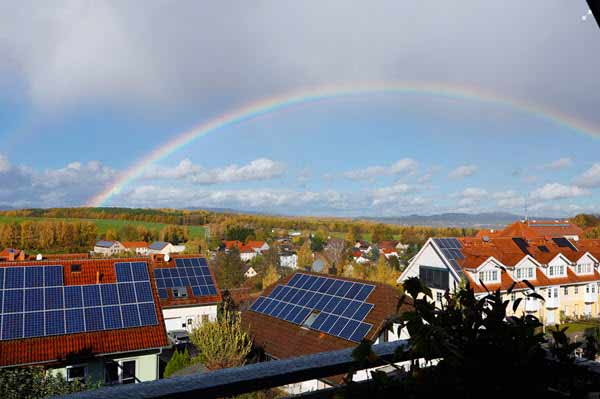
People who install solar panels tend to know their electricity numbers by heart. Ask the same household how much gas the furnace burns and the answer is usually a shrug. Yet in a cold-winter state, heating is often the largest single energy cost in the house, and a high efficiency furnace replacement can remove a share of that cost that no rooftop array will touch, because the panels make electricity and the furnace burns gas.
The subject is surrounded by half-truths. Three of them come up again and again.
Myth 1: “My furnace still runs, so it is efficient enough”
Running and running well are different things. Furnace efficiency is measured as AFUE, the share of the fuel that ends up as heat inside the house. A standard furnace rated at 80 percent sends a fifth of the gas you pay for up the flue. A condensing furnace rated at 96 percent recovers most of that loss by pulling extra heat out of the exhaust.
The arithmetic is straightforward: to deliver the same warmth, the 96 percent unit burns about 17 percent less gas than the 80 percent one. And an older furnace often performs below its original label after decades of wear.
| Furnace type | Typical AFUE | Heat from $1 of gas | Venting |
| Older standard unit | Below 80% | Under 80 cents | Metal flue or chimney |
| Current standard | 80% | 80 cents | Metal flue or chimney |
| Condensing | 90% to 98% | 90 to 98 cents | Plastic pipe through a side wall |
Myth 2: “The highest rating is always the right buy”
A furnace is only as good as its installation. A 98 percent unit that is too large for the house will switch on and off in short bursts, wear out early and leave rooms uneven, and it may never deliver the number on its label. Sizing matters more than the last two points of AFUE.
What decides real-world performance
- A load calculation for the house as it is today, not a copy of the old unit’s size.
- Ductwork that is sealed and large enough for the airflow the new furnace needs.
- A proper route for the plastic vent pipes and a drain for the condensate a condensing furnace produces.
- A variable-speed blower and two-stage or modulating burner, which let the system run long and low instead of short and loud.
- Commissioning: gas pressure and temperature rise measured and recorded after installation.
Synergy3, a family-run HVAC contractor serving Greater Philadelphia and South Jersey since 2006, makes a point that matters to energy-minded owners in particular: if the house has gained insulation, air sealing or new windows since the old furnace went in, the right replacement is very likely smaller than the original.
Myth 3: “With solar on the roof, gas heat no longer makes sense”
For some homes a heat pump is the natural partner for solar, and it deserves a serious look. For others, the panels produce the least in exactly the months when heating demand peaks, and the existing gas line and ducts make an efficient furnace the practical choice for the next fifteen years.
There is also a middle path: a dual-fuel system, in which a heat pump runs on solar-friendly mild days and a high-efficiency furnace takes over in deep cold. It is not a compromise so much as a way of using each fuel where it performs best.
Where to start
Look at the data plate on the furnace and twelve months of gas bills. If the unit is past fifteen years and rated at 80 percent or less, an estimate costs nothing but an hour. Technicians at Synergy3 recommend asking every bidder for the load calculation in writing. A contractor who can show the numbers behind the size is usually one who will get the rest of the job right.