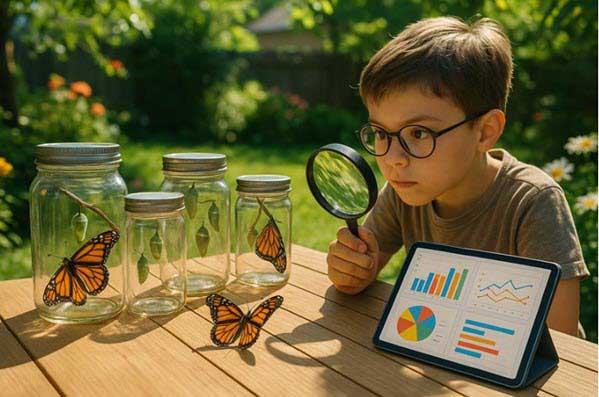
Transform your backyard into a lively laboratory to track local butterfly metamorphosis! You’ll engage with each life stage, from egg to adult, using simple tools like notebooks, cameras, and field guides. By regularly recording observations, you’ll uncover patterns and behaviors in your butterfly population. Sharing your findings can strengthen community awareness of biodiversity and conservation efforts. If you’re curious about the best practices and tools for this project, there’s so much more to explore!
Why Butterfly Metamorphosis Is a Great Student Project
When you immerse yourself in a butterfly metamorphosis project, you’re not just observing nature; you’re engaging in a hands-on learning experience that captivates students of all ages.
This project dives deep into butterfly biology, allowing you to explore life cycles, ecosystems, and the delicate balance of nature. By witnessing the transformation from caterpillar to chrysalis to butterfly, you foster genuine curiosity and spark student engagement like never before.
Observing these changes firsthand encourages critical thinking and scientific inquiry, empowering you to ask questions and seek answers. This process nurtures a sense of freedom and independence, essential for budding naturalists.
Plus, it’s a perfect opportunity to connect with your local environment and appreciate the beauty of life’s transformations.
Getting Started: Tools and Materials for Your Backyard Laboratory
To kick off your butterfly metamorphosis project, you’ll need some essential tools and materials for observation.
Gather items like a notebook, magnifying glass, and a camera to document your findings effectively.
With the right setup, you’ll be ready to explore the fascinating transformations of these beautiful creatures.
Essential Tools Overview
As you begin your journey into the fascinating world of butterfly metamorphosis, gathering the right tools and materials is essential for your success.
These essential tools will help you track your observations effectively and understand the butterfly life cycle better. Here’s what you’ll need:
- Notebook: For recording your findings and tracking methods.
- Camera: To capture images of each stage of metamorphosis.
- Field guide: To identify local butterfly species and their behaviors.
- Measuring tape: For documenting growth and changes in the caterpillars and chrysalis.
Materials for Observation
Setting up your backyard laboratory for observing butterfly metamorphosis requires carefully chosen materials that enhance your experience and guarantee accurate documentation. Use a reliable field guide for butterfly identification; this will help you recognize species and track their life stages, a method often used in an online elementary school setting where students are guided through structured, observation-based science activities.
Start with a reliable field guide for butterfly identification; this will help you recognize species and track their life stages. A notebook or digital app is essential for recording your observations, including dates, weather conditions, and specific behaviors.
Use a magnifying glass to inspect caterpillars and chrysalises up close, and a camera can capture stunning visuals for later analysis.
Develop various observation techniques, such as timed observations or sketching, to deepen your understanding.
With these materials, you’ll not only enjoy the freedom of exploration but also contribute valuable data to butterfly research.
Key Stages of Butterfly Metamorphosis
While many might admire butterflies for their beauty, understanding the key stages of their metamorphosis reveals the fascinating transformations they undergo.
This process consists of four essential stages:
- Egg Stage: Tiny eggs are laid on host plants, ready to hatch.
- Larval Stage: Once hatched, caterpillars emerge, voraciously feeding and growing, preparing for the next stage.
- Pupal Stage: The caterpillar forms a chrysalis, during which it undergoes a remarkable transformation into a butterfly.
- Adult Stage: Finally, the butterfly emerges, ready to spread its wings and explore the world.
Best Practices for Documenting Your Findings
To effectively document your findings during butterfly metamorphosis research, it’s essential to maintain a systematic approach. Start with clear data collection methods; establish a consistent schedule for observations.
Use precise observation techniques, noting the time, location, and environmental conditions each time you check on your caterpillars. Keep a dedicated journal or digital log to track changes, including dates of each stage and any behaviors you observe.
Photographs can enhance your documentation, providing visual evidence of development stages. Don’t forget to include notes on any anomalies or unexpected events, as these can be valuable insights.
How to Share Your Butterfly Findings Online
Sharing your butterfly findings online can amplify your research and connect you with fellow enthusiasts.
You’ll want to choose the right platform to showcase your data, engage with your audience, and visualize your results effectively.
Each of these steps plays an essential role in making your discoveries accessible and exciting to others.
Choosing The Right Platform
Finding the right platform to share your butterfly findings online can greatly enhance your research’s visibility and impact.
With so many options available, consider these factors for effective platform selection and user accessibility:
- Ease of Use: Choose a platform that’s intuitive, allowing you to upload data effortlessly.
- Community Engagement: Look for spaces where fellow enthusiasts and researchers can connect and collaborate.
- Data Presentation: Verify the platform supports visuals, like photos and graphs, to enrich your findings.
- Accessibility: Opt for platforms that can be accessed on various devices, making your research available to all.
Engaging With Your Audience
How can you effectively engage your audience when sharing your butterfly findings online? Start by inviting them into your journey.
Use social media platforms to share updates and ask questions that spark discussions. Encourage audience engagement by creating polls or quizzes related to your findings. This interactive learning approach not only makes your data more relatable but also fosters a sense of community among fellow enthusiasts.
Consider hosting live sessions to present your research and answer questions in real-time. Don’t forget to highlight the beauty of local butterflies, using enthralling stories to connect emotionally with your audience.
Visualizing Your Data Effectively
While presenting your butterfly data online, effective visualization plays a crucial role in capturing your audience’s attention and enhancing their understanding.
By utilizing data visualization techniques, you can transform your findings into compelling stories that resonate. Here are some tips to share your butterfly metamorphosis data effectively:
- Use engaging charts to illustrate trends in growth and transformation.
- Incorporate photographs of each life stage to create a visual narrative.
- Utilize infographics to summarize key points and make your data digestible.
- Share interactive elements like maps to show migration patterns and local habitats.
These strategies not only make your findings more accessible but also foster a deeper connection with your audience, empowering them to appreciate the beauty of butterfly metamorphosis.
How Butterfly Tracking Contributes to Local Biodiversity Awareness
Butterfly tracking is a powerful tool that not only enhances your understanding of these delicate creatures but also fosters a deeper appreciation for local biodiversity.
By observing butterfly life cycles and migration patterns, you gain insights into the health of ecosystems. This hands-on experience provides invaluable biodiversity benefits, helping you connect with nature on a personal level.
You’ll also engage in conservation education, learning about the critical role butterflies play as pollinators and indicators of environmental change.
As you gather and share data, you inspire others in your community to recognize the importance of protecting habitats.
Ultimately, butterfly tracking empowers you to become an advocate for local biodiversity, making a meaningful impact in your backyard and beyond.
Other Engaging Science Projects for Virtual Learners
What engaging science projects can you explore as a virtual learner? There’s a world of discovery waiting for you, blending fun with environmental education.
Check out these exciting science experiments you can tackle right from home:
- Plant Growth Studies: Observe how different conditions affect plant growth, like light and water variations.
- Water Quality Testing: Collect samples from local sources, analyze them, and learn about ecosystem health.
- Insect Identification: Create a field guide of local insects, documenting their habits and habitats.
- Weather Tracking: Record daily weather patterns and analyze their impact on local wildlife.
These projects not only spark curiosity but also deepen your understanding of the environment, all while empowering you to contribute to scientific knowledge.
Conclusion
In your backyard laboratory, you’re not just observing butterfly metamorphosis; you’re weaving a tapestry of nature’s wonders. Each caterpillar to chrysalis is a story waiting to be told, and your findings can inspire others to appreciate the delicate balance of our ecosystems. By sharing your journey, you’re planting seeds of curiosity and awareness, nurturing a community that values biodiversity. So, embrace your role as a young scientist, and let your discoveries take flight, transforming the world one butterfly at a time.