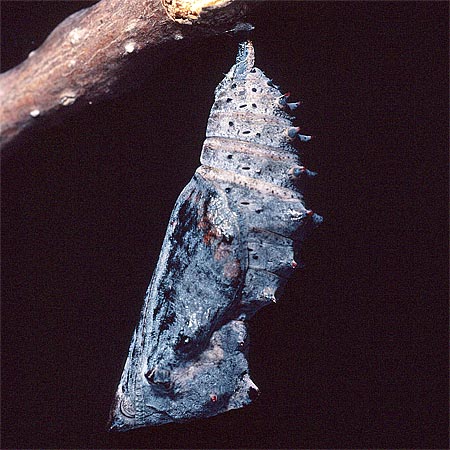
On the first warm afternoon in February, a Mourning Cloak can lift off a woodpile and glide across beds that look completely dead. It never left. It spent the cold months as an adult, wedged into bark, waiting for a day warm enough to fly. Plenty of the butterflies we plant for summer are still in the yard in winter, just in forms that are easy to miss: eggs on a twig, caterpillars curled in leaf litter, chrysalises hanging from a brown stalk.
So what you do in the garden over winter counts. In the South, mild spells come and go all season. Each one pulls gardeners outside to tidy up, cut back, and spray, and any of those chores can wipe out next spring’s butterflies before anyone sees them.
Spraying carries the most risk. A warm-day mosquito spray drifts onto dormant fennel and other host stalks where chrysalises hang. Before you treat anything, find out the real answer to are there mosquitoes in Atlanta during winter, because a gardener who sprays without checking can kill the overwintering stage without ever seeing it.
Leave the brown stalks standing
The classic fall cleanup, cutting everything to the ground, does the most quiet damage. Black Swallowtails often pupate on the stems of the plants they ate as caterpillars: fennel, dill, parsley, golden alexanders. A brown chrysalis on a brown stalk is close to invisible. It goes straight into the yard waste bag.
Wait until daytime temperatures hold in the 50s for a week or two, usually March in much of the South. Then cut stems to about 12 to 18 inches, not to the soil line. Check each stalk first. Find a chrysalis, and you snip that stem and lay it upright in a sheltered spot nearby.
Seed heads earn their place too. Coneflower, black-eyed Susan, and asters feed goldfinches all winter, and the hollow stems shelter native bees along with butterfly pupae.
Stop bagging every leaf
A lawn raked bare looks finished. It also has nowhere to hide. Great Spangled Fritillary caterpillars spend the winter in leaf litter near violets. Red-banded Hairstreaks, common across the Southeast, lay eggs on fallen oak and sumac leaves. Question Marks and Eastern Commas wait out the cold as adults, tucked under leaves and loose bark.
You don’t have to give up the whole yard. Rake leaves off the grass and onto the beds, two to three inches deep. Or pick one corner under a tree and let them pile up there. Keep the leaf blower out of shrub borders, where it blasts away the very litter those insects are living in.

Running the mower over leaves is a compromise, and not a harmless one. Whole leaves give far better cover than confetti.
Don’t fog the yard on a warm afternoon
Atlanta winters usually bring a few 70-degree days, and an odd mosquito can show up on one of them. Reaching for a backpack fogger is an understandable impulse. But broad-spectrum products like pyrethroids don’t sort mosquitoes from anything else. They coat bark, stems, and leaf litter, the same surfaces hiding chrysalises and dormant adults, and some of that residue lingers into spring, when caterpillars hatch.
Monarchs show what’s at stake. They don’t overwinter in Georgia, but they move back through the Southeast in early spring hunting for untreated milkweed. According to Monarch Joint Venture, the eastern monarch population overwintering in Mexico covered 2.93 hectares in the 2025-26 season, about 64% more than the previous winter’s 1.79 hectares. A welcome rebound, yet still a population that can’t spare losses to stray spray.
| Measure | Latest figure |
|---|---|
| Eastern monarch overwintering area | 2.93 hectares of oyamel fir forest in Mexico |
| Change from the previous winter | About 64% higher than the prior 1.79 hectares |
| Number of overwintering colonies | Nine: three in Michoacán, six in Estado de México |
| Colonies inside the Monarch Butterfly Biosphere Reserve | Five, covering 5.61 acres |
| Colonies outside the reserve | Four, covering 1.63 acres |
If mosquitoes really are biting during a winter warm spell, treat where they breed, not the whole garden. If you hire a service, ask them to stay off host plants, flowering shrubs, and leaf-litter beds.
Fix the water, not the whole yard
The opposite mistake is ignoring standing water, then grabbing chemicals once mosquitoes arrive. A forgotten plant saucer or a clogged gutter breeds far more mosquitoes than a fogger will ever kill. Empty the water and you protect butterflies while cutting mosquito numbers.
- Tip out plant saucers, buckets, and wheelbarrows after every rain.
- Scrub and refill birdbaths at least weekly so larvae never mature.
- Clear gutters and corrugated downspout extensions where water sits for days.
- Drop Bti dunks into rain barrels and ornamental water you can’t drain.
One caution about the products. Bti (Bacillus thuringiensis israelensis) targets mosquito and fly larvae. Its cousin Btk, sold for “caterpillar control,” kills butterfly larvae. Read the label, and never spray Btk anywhere near host plants.
Butterflies still need moisture, just not open water. A shallow dish of damp sand with a pinch of compost makes a puddling station where males gather minerals in spring. The sand stays wet without pooling, so mosquitoes can’t lay eggs in it.
This weekend, walk the garden with a bucket and dump anything holding water. Then tie bright twine around your fennel, parsley, and milkweed stalks so nobody cuts or sprays them before March.