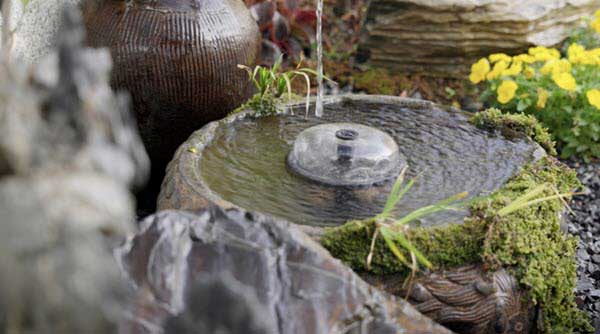
If someone builds a garden pond, they want two things. One thing they want is clean water. The other thing they want is something pretty to look at. A fountain is often the focal point of the garden pond. However, water needs to be clean for aquatic life.
Therefore, the question becomes: Can a pond filter and fountain combo really accomplish two tasks well? The answer depends on the design of the garden pond and the number of fish in the pond. Let’s take a look at this topic from a practical perspective.
What Are Pond Filter and Fountain Combo Systems
A pond filter and fountain combo system is a water gardening system where water is filtered and a fountain runs at the same time. A separate filter box and fountain pump are not required. In other words, a separate pump and separate filter box are combined into one unit. Water enters from the bottom of the unit. Water goes up through a spray nozzle after passing through the filter media.
That is how one unit can do two things. The traditional garden pond pump circulates water to a filter box. Water flows from the filter box to the waterfall or fountain. The pond filter system circulates water to the spray nozzle, filtering water at the same time. The advantage of having separate systems is having more control. The advantage of combo systems is simplicity and convenience.
Common Garden and Pond Situations for Using Combo Systems
A solar powered fountain pump with filter works well in the following garden pond or small pond situations:
- Small backyard ponds
- Decorative garden ponds
- Wildlife ponds with no fish or only a few fish
- Preformed pond shells (ready-made plastic ponds)
In these cases, space is limited, and the owner wants the installation process to be easy.
How Fountain Pond Filters Work Together
Water Circulation and Filtration Combined in an Integrated System
Water circulation is very important. When the water is stagnant (does not move), it becomes cloudy. It also becomes prone to the development of algae. The combo system pulls water from the bottom of the pond. Then it pushes the water through filter pads.
Finally, the water is pushed up through the fountain nozzle. This constant movement of the water prevents stagnation (standing water). This movement also allows the oxygen to be distributed evenly throughout the pond.
Mechanical and Biological Filtration with the Fountain Pond
Most pond filter fountain combos have two basic types of filters. Mechanical filters remove big pieces of debris like leaves, dirt, and fish waste. This is done with the help of the filter pads.
Biological filters use good bacteria. This good bacteria converts ammonia (toxic waste of the fish) into less toxic materials. Both of these processes must happen for the pond water to be healthy.
How Fountains Help Oxygenate the Pond
When the water shoots up into the air and falls back into the pond, it becomes oxygenated with the oxygen in the air. The more oxygen available in the water (dissolved oxygen), the healthier the fish will be. The more oxygen available in the water, the more the good bacteria will thrive.
The more the water moves around the pond, the less likely mosquitoes will breed. This means that it is not just a decorative item. It has a purpose to perform as well, especially concerning water quality.
Benefits of Using a Pond Filter and Fountain Combo
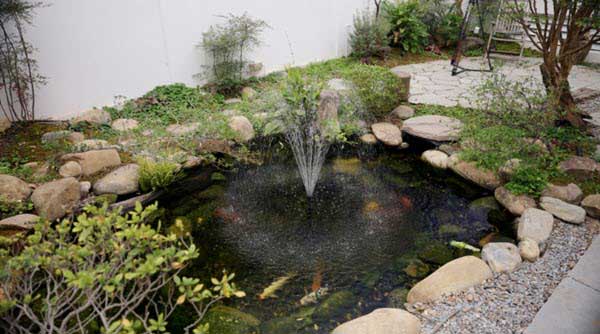
Combining Visual Appeal with Functional Filtration
A pond filter fountain combo has a number of benefits, among them simplicity, space-saving, ease of installation, energy efficiency, and reduced equipment requirements. It is simple to use. A pond filter and fountain combo provides a homeowner with a product that has both aesthetic value and filtration capability.
It is also space-saving. A pond filter fountain is designed to be placed directly inside a pond. This is a great advantage, especially for smaller ponds that may not be able to accommodate a separate filter outside the pond.
It is also easy to install. A pond filter fountain is easy to install. It requires only a few steps to get it working. It is a straightforward product to use, even for a beginner in pond keeping. It is also energy-efficient. A pond filter fountain uses only one pump to operate, unlike a separate filter that uses a separate pump to function.
It is, therefore, a great advantage to a homeowner because it reduces the amount of electricity used to power a pond. It also reduces the number of pieces that a homeowner has to worry about, making it a great product for a beginner because it is easier to use, with fewer parts to worry about. It is also easier to maintain because it has only one part that is located in one place, making it easier to find when it breaks down.
Ideal Use Cases for Small to Medium Ponds
A pond filter fountain combo is ideal for use in a number of ponds, among them:
- A koi pond that is not heavily stocked with fish.
- A goldfish pond.
- A decorative pond.
It is ideal because it has a moderate capacity to filter water, making it suitable for a pond that is not heavily stocked with fish. It is also ideal because it is able to function well even if a pond is moderately stocked with fish, as long as it is not fed heavily.
Limitations of Pond Filter Fountain Systems
Filtration Capacity vs Fountain Performance Trade-Offs
A pond filter fountain is not able to provide a high level of filtration, nor is it able to provide a high level of fountain performance. If you make the fountain spray very high, more energy will be used to create water displays. Less pressure may be left to push water through the filter chamber. Lowering the spray may improve pond filtration.
Challenges in Fish Ponds and High Bio-Load Ponds
High bio-load means a lot of fish or big fish which produce a lot of waste. For a koi pond which is heavily stocked, a pond filter and fountain combo may not be sufficient. An additional external pond filter may be needed. Large koi produce more waste than small goldfish. The pond filter needs to be suitable to handle this amount of biological demand.
Maintenance Considerations for Combo Units
The pond filter is placed underwater. Therefore, it can quickly accumulate trash. Sponges used in pond filters need regular cleaning. Failure to do this may cause water flow to slow down. The fountain spray may be affected as well.
Choosing the Right Pond Filter and Fountain System
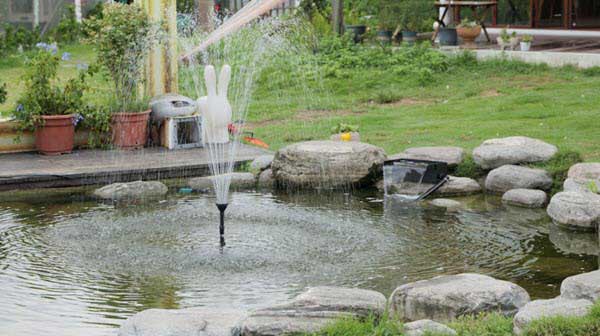
Matching Pond Size and Water Volume to the System
To start, calculate your pond’s volume. The formula is to multiply length, width, and depth. Select a pond filter and fountain system which can handle slightly more water than your pond can hold. This is to ensure safety. For fish ponds, water turnover should be achieved every one to two hours.
When a Fountain Pond Filter Is Enough—and When It’s Not
A pond filter and fountain combo is enough when:
- The pond is small to medium
- There is a low to moderate amount of fish
- There is a small water problem
It may not be enough when:
- The pond is big
- Koi are heavily stocked
- Water turns green or cloudy often
In those cases, consider adding extra filtration.
Common Mistakes to Avoid with Combo Systems
The common mistakes to avoid:
- Buying a unit too small for the pond
- Overlooking the fish load
- Using the highest spray setting at all times
- Neglecting regular cleaning
The common mistakes to avoid will definitely impair the performance of the fountain.
Tips for Balancing Clean Water and Fountain Aesthetics
The height of the nozzle should be moderately set, and the fish movement should be observed as well as the clarity of the water. If the water is cloudy, it should be cleaned by adjusting the height of the nozzle and cleaning the pads. Clear water and a beautiful fountain can be achieved; it is all about proper maintenance and size.